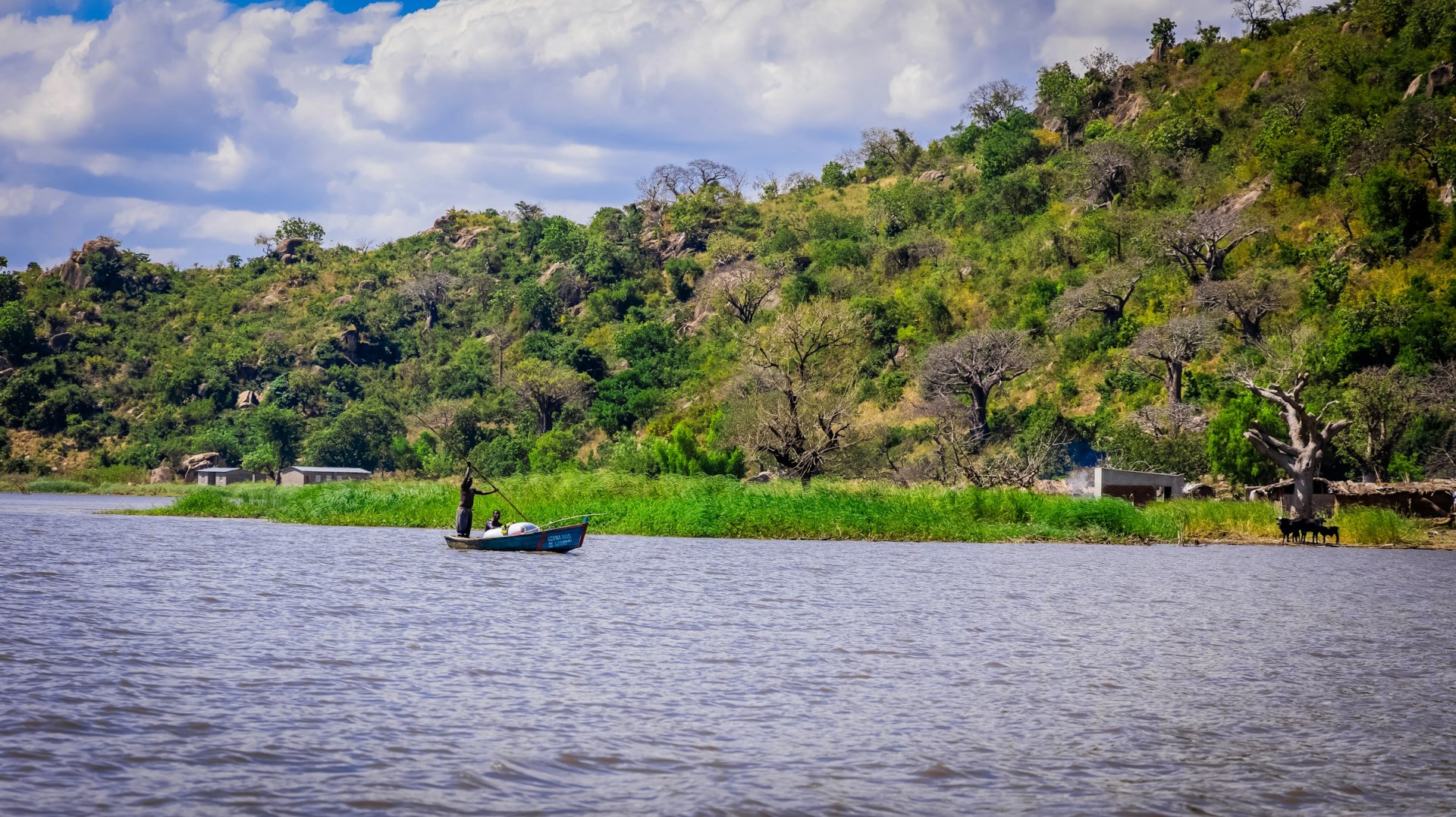
Njalo Island is a small inhabited island in Lake Chilwa, in southern Malawi’s Phalombe District. Situated in the lake’s open waters, it is part of a wetland landscape shaped by changing water levels, shallow channels, marshes, and seasonal fishing activity. The island is home to a close-knit community whose daily life is closely connected to the lake. Fishing provides an important source of food and income, while boats are essential for transport between the island and mainland communities. Njalo offers a different perspective on Malawi’s lakeshore life, away from the country’s better-known tourist centres.
Local identity on Njalo Island is closely linked to fishing and the communities of the Lake Chilwa basin. Residents depend on the lake not only for fish but also for transport and other aspects of everyday life. Traditional fishing practices remain important, with fishers using small wooden boats and a range of nets and traps. The wider Lake Chilwa region has a long-standing fishing culture involving species such as matemba, makumba, and mlamba. Because the island is relatively isolated, community life is shaped strongly by cooperation, shared resources, and the changing conditions of the lake.
The island’s environment is defined by Lake Chilwa, a shallow inland lake surrounded by extensive wetlands, marshes, and seasonally flooded grasslands. Njalo is one of several islands within the Lake Chilwa ecosystem, alongside larger Chisi Island and other smaller islands. The lake supports important fish populations and provides habitat for waterbirds and wetland wildlife. From Njalo, the surrounding landscape consists largely of open water and low-lying vegetation, creating broad views with few built structures. Its remote setting makes the island particularly suited to observing the relationship between people, fishing, and a changing wetland environment.
Fish is central to life on Njalo Island and to the wider food culture around Lake Chilwa. Small fish known locally as matemba are among the lake’s important catches, while other commonly recorded groups include makumba and mlamba. Fish may be eaten locally or processed and sold to communities elsewhere in the region. Njalo is also notable for the practical challenges created by its isolation: residents rely on boats to reach mainland services, and rough conditions can make crossings difficult. These realities give the island a strong sense of self-reliance and demonstrate how closely livelihoods remain tied to Lake Chilwa.
Other Popular Destinations in Malawi